
From Aldershot to a pub in Birmingham
- Wendy Faux
- Oct 1, 2022
- 3 min read
Her Majesty The Queen’s Platinum Jubilee will soon be upon us. Many preparations are being made and whilst the focus is on summer lunches and street parties there are also celebrations taking place within religious communities.
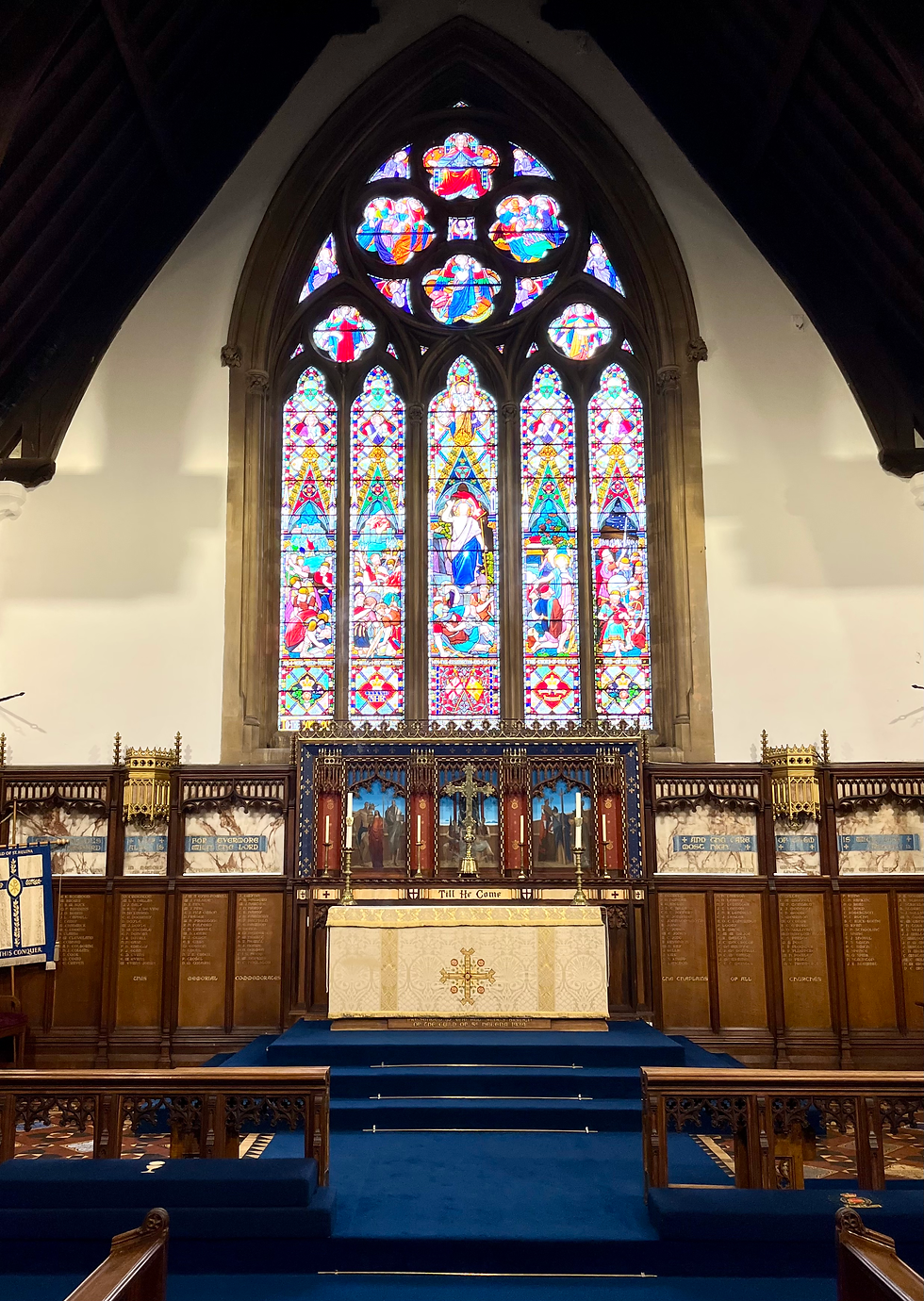
My local church just happens to be the Royal Garrison Church, Aldershot. Commissioned by the Duke of Wellington in 1863 on his return from Crimea, the church will host the Rushmoor Council service of celebration for HM The Queen.
As children we would be ‘dragged’ around churches, being told how to read them and to wonder at the architecture, the craftsmanship and the history but I didn’t truly understand. Something have sunk in because I am now a great believer that, wherever you are in the world, head for the places of worship as you will find the beating heart of the history of a place.
It does’t matter whether you are religious or not, a religious building reflect social history. In the Royal Garrison Church it is military history.

Each Sunday I contemplate my surroundings: the plaques on the walls and pillars; the sculptures; the architecture; the accoutrements. Each Sunday I find myself thinking about the soldiers and their families. The congregations that would have filled the church over the years which is now a resolute handful.
Each of the kneelers is dedicated to either a military unit or an individual. Each has been made with love or dedicated in love. The swathe of maroon as you move forward amongst the pews becomes more apparent. This is the spiritual home of The Parachute Regiment.





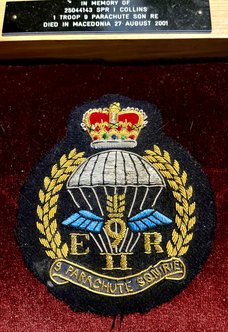

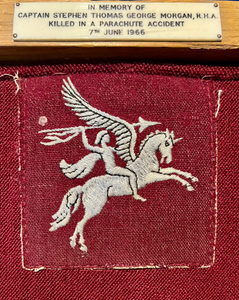

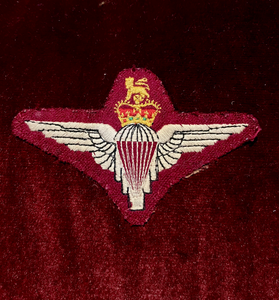
It is not just The Parachute Battalions that are remembered but also those who served alongside them: the logisticians; mechanics; transport units - all commemorated together.
Initially, I thought the commemorations were stuck in time, ending with 1945. It was not until after the service this Sunday when I decided to take photographs that I was corrected; one was dedicated to a soldier who tragically died in 2001.
There are also some dedicated to paratroopers from other countries.
On the walls are the names of those who have died in service as part of regiments, brigades and formations that have long since disappeared from living memory…or so I thought!




I had taken a photograph of stone wall memorial as the wording drew my attention: The Old Contempibles.
I couldn’t understand why they would write that under the name of a senior officer when clearly he had done something special, otherwise there wouldn’t be quite such a large memorial on the wall.
Research has led me from the Garrison Church to a pub in Birmingham (yet to visit but now on my list) via an extraordinary group of soldiers who fought in 1914. For military historians this will be a ‘everyone knows that’ moment.
But I want to show the non-military historians how curiosity can be aroused and lead you to the most extraordinary adventures…and this one is just starting!
No longer having to wait to visit the library I returned home to Google.
Why would British soldiers be contemptible? What had they done?
For those, like me who don’t know (and in very brief summary) Kaiser Wilhem II issued a set of orders referring to Field Marshall Sir John French’s British Expeditionary Force (B.E.F.) 1914 as a ‘contemptible little army’ who were blocking his route to the English Channel.

Looking it up I discover that the members of The Contemptibles were known as chums. I love this idea of referring to each other as a chum. A word of its time that says so much of men who have returned from war.
The Royal Garrison Church is a curator of military history.
After the service I ventured up to the altar, not least because the services are held around a smaller table that has been brought forward and I can’t see what is written on the wall, in the windows.
There, on the floor, is the most extraordinary history of the role of Padres, the military term used for vicar. Some of the tiles are covered over but those that are not tell a quick story in themselves. Some of the abbreviations I can’t decipher (yet and any help would be greatly appreciated) but the places and dates indicate military service that would have been adventurous, if not dangerous.
So how did I get to a pub in Birmingham? The Old Contemptibles pub was renamed in 1953 in honour of the Association members that used to meet there. In 2007 one of the rooms was dedicated to those who served in World War 1.
It’s not a trip to the pub, it’s research!


Comments