
Choose to Challenge
- Wendy Faux
- Oct 1, 2022
- 4 min read
I have chosen to challenge all through my life. This has led to many labels but they all come back to one thing:
I am me.
I am choosing to celebrate women all year round through the expansion of my exhibition ‘Not Just a Wife’ this year. I also want to expand to celebrate those who have chosen to challenge for themselves.
Many women are heralded for their incredible successes, as it should be, but what does success look like? For some it is getting up in the morning, giving all the positivity you have to your children so that they bounce out into the world believing in themselves and their future. For some it is preparing for that record breaking event where your focus is in overcoming the criticism because ‘a woman has never done that before’.
I will always stand up for what I believe is right and for those who are struggling to stand up for themselves. I don’t do it by taking over but rather by empowering them, by being by their side and being their ‘back up’ and reassurance that what they are doing is the right thing.
Sometimes all we need is that one person so that when we do ‘choose to challenge’ we do not feel alone.
International Women’s Day has a history of its own; it is not a greetings card festival, it is an ongoing movement that began in 1908. It has global links from the very outset with the women’s suffrage in the United Kingdom to the Russian women going on strike forcing the Tzar to abdicate.
In 1977 the United Nations declared a day for Women’s Rights and International Peace ‘in accordance with their (Member States) historical and national traditions’. (IWD History)
My life in the army - as a child, soldier, wife - has given me the opportunity to see women from all nationalities, cultures and heritage. What a privilege it has been to share customs and traditions and to learn so much and to discover how much we all have in common.
Having friends within the Fijian community in the British Army has given me an insight into a country where I feel I have already been. OK, so Germany may not have the same climate as Suva but when you walk into a community hall where a Fijian celebration is taking place you are transported.


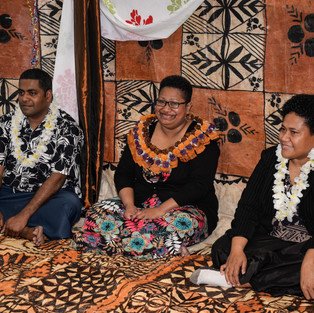


The music, the language, the decor it is all about ‘home’. The women would sweep me in and, barring the ability to speak their language, would include me in all the celebrations. For their continued friendship ‘Vinaka aka levu’.
Living in Germany for over 25 years of my life has meant that I have been a part of history from a very lived experience. In school we learn about the World Wars: we learn about it from the British perspective. I have had the privilege of talking to women who were forced into the ‘Lebensborn’ programme, who hid disabled relatives, who survived concentration camps. It has given me a more complete picture of life in World War 2.
To hear of a mother who found out her son was in a Prisoner of War Camp close to her home town so she walked to take him loaves of bread. She was shot at ‘for fun’ as she approached the wire. They were German, the soldiers were American.
Visiting Nepal I met some Nepalese women making stars out of crisp packets for the shop in the hotel where I was staying. All I had was ‘Namaste’. It was enough. The smile of the woman and the pride in her work made me stop with her awhile. With the help of another lady I learned of the project that was giving women opportunities to earn money after they had left abusive relationships.
We don’t need language - we need humanity. We need to choose to challenge, not just in far off countries but on our own doorsteps.


For me, Empowered History - A Voice is the Story is about challenging history. It is about collecting the contemporary history from all voices so that we can choose to challenge what we are being given as information.
I know that military wives centuries before me were on the frontline. They were firing rifles, involved in battles and, of course, were providing medical support on the battlefields. We know a lot about the nursing compassion of women in the Crimean War because of Mary Seacole and Florence Nightingale. Society at the time would accept that these women were in a role that was acceptable for women of that time.
But what about the women who were on the battlefield in other roles? I choose to challenge that the only roles that were undertaken by women were wife or nurse. Where can we find this history?
What about the women of colour who were with the British Army? How are they represented - if indeed they are represented at all? We need to find these women and their stories, collate them and pass them on as part of the whole history.
Starting today on International Women’s Day 2021 my aim is to ensure that, at the very least, my daughters know that there is more behind the story than just the headline. Choose to challenge the headline and find the other voices in the story. Empower those voices that have yet to be heard and ensure that we all leave a more complete history for future generations.


Comments